What Is a Silt Fence? How It Works & Installation Guide
Professional Erosion
Control and Pipe Supply
VISIT OUR NEW LOCATION IN SHERMAN
phone

Our office hours

Mon-Thu 7am-5pm, Fri 7am-4pm

What Is a Silt Fence? How It Works, When to Use It and Installation Tips

What Is a Silt Fence? How It Works, When to Use It and Installation Tips

If you work in construction, land development, or stormwater management in Texas, you have seen silt fences on job sites. But what exactly is a silt fence, how does it work, and when are you required to use one? This guide covers everything contractors, engineers, and site managers need to know about silt fences — from how they trap sediment to proper installation and maintenance.
 

What Is a Silt Fence?

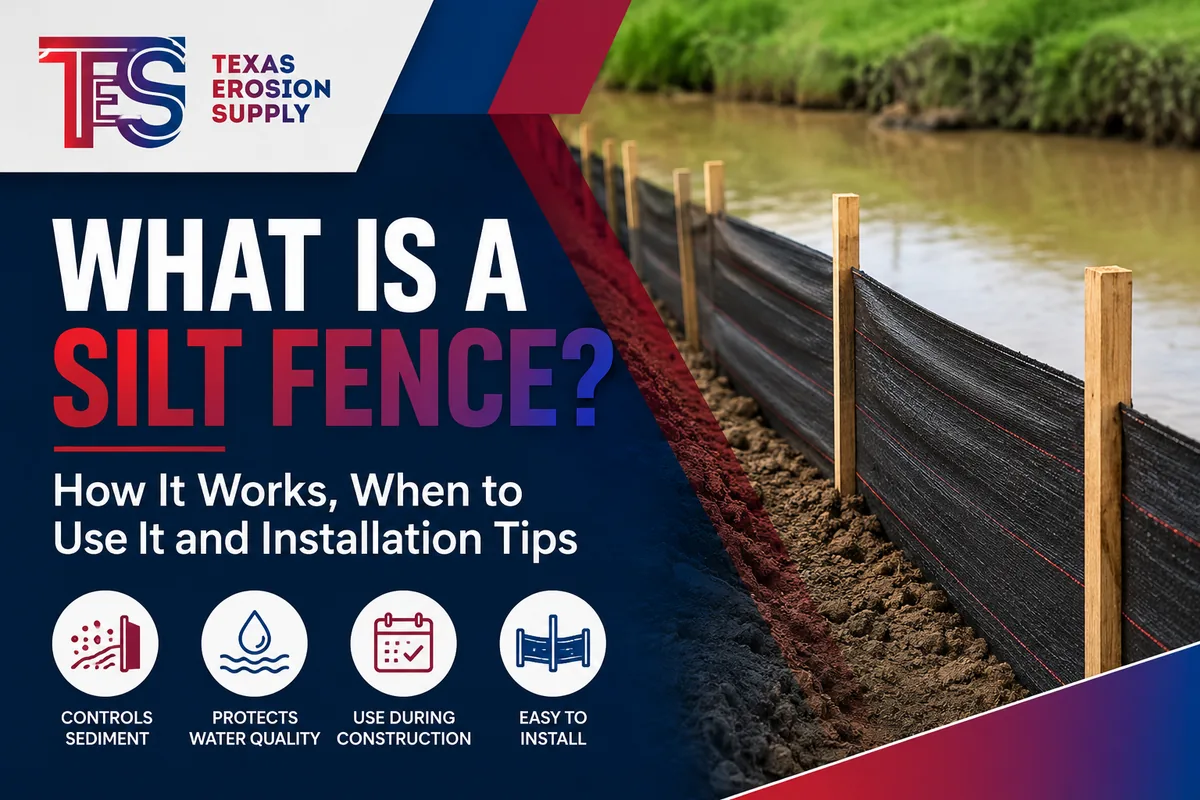
A silt fence is a temporary sediment control barrier made of geotextile fabric stretched between wooden or metal stakes and partially buried in the ground. It is installed at the downhill perimeter of a disturbed area — such as a construction site, grading project, or land clearing operation — to slow the flow of stormwater runoff and capture sediment before it leaves the site.

The fence does not stop water. Instead, it slows water velocity enough that suspended soil particles drop out and settle on the uphill side of the fence rather than washing into drainage systems, waterways, or neighboring properties.
 

How Does a Silt Fence Work?

Silt fences work through a combination of filtration and settling. As stormwater runoff approaches the fence, the geotextile fabric creates resistance, pooling water temporarily on the uphill side. This ponding slows velocity and gives sediment time to settle to the ground. Some fine particles do pass through the fabric, but the majority of coarser sediment — sand, silt, and clay aggregates — is retained.

Effective silt fence performance depends on three factors:

  • Fabric permeability: The geotextile must allow water to pass while blocking soil. Too permeable and sediment passes through; too impermeable and water overtops the fence.
  • Proper burial depth: The bottom of the fabric must be trenched into the soil at least 6 inches to prevent runoff from undercutting the barrier.
  • Post spacing and tension: Posts set too far apart allow the fabric to bow and fail under hydrostatic pressure. Standard spacing is 6 to 8 feet for flat terrain, closer on slopes.


When Is a Silt Fence Required?

In Texas, silt fences are typically required on any construction project that disturbs one or more acres of land — the threshold that triggers a TPDES Construction General Permit (CGP) from the Texas Commission on Environmental Quality (TCEQ). Projects under one acre may still require silt fences under local municipal rules or as a condition of site plan approval.

Common applications include:

  • Residential and commercial site grading and excavation
  • Road construction and highway improvement projects
  • Pipeline and utility corridor work
  • Land clearing for subdivision development
  • Detention and retention pond construction

Your Storm Water Pollution Prevention Plan (SWPPP) will specify where silt fences are required on a given project. Inspectors from TCEQ or the local municipality will verify that your erosion controls are properly installed and maintained.
 

Types of Silt Fences

Not all silt fences are the same. Choosing the right type for your site conditions matters:

  • Standard silt fence: Standard geotextile fabric (typically 100 flow rate) on wooden stakes. Suitable for flat to gently sloping terrain with low to moderate runoff volume.
  • Wire-backed silt fence: Geotextile fabric attached to a wire mesh backing. The wire provides structural reinforcement, making this appropriate for steeper slopes or areas with heavy runoff where a standard fence would bow or fail.
  • Super silt fence: A heavy-duty version with higher-strength fabric and steel T-posts. Used in high-flow areas, around the perimeter of large disturbed areas, or anywhere failure would cause significant off-site impact.


How to Install a Silt Fence

Proper installation is critical. A poorly installed silt fence can fail during the first significant rain event, defeating its entire purpose. Follow these steps:

  1. Mark the fence line. Run the fence line along the contour of the slope, not up and down it. The fence should intercept runoff flowing downhill, not channel it.
  2. Dig the trench. Excavate a trench 6 to 8 inches deep along the fence line. This is where the bottom of the fabric will be buried.
  3. Drive stakes. Install stakes on the downhill side of the trench, spaced 6 feet apart on slopes and up to 8 feet on flat ground. Stakes should be driven 18 to 24 inches into the ground.
  4. Attach and bury fabric. Unroll the geotextile fabric and attach it to the stakes. Place 6 to 8 inches of fabric into the trench, then backfill and compact the soil over it. This buried apron prevents undercutting.
  5. Overlap joints. When joining fabric rolls, overlap at least 18 inches and fasten both pieces to a shared stake.


Maintenance and Inspection

TPDES permits require that erosion controls be inspected at least every 14 days and within 24 hours after any rain event of 0.5 inches or more. For silt fences, your inspection checklist should include:

  • Fabric intact with no tears, holes, or bypass gaps
  • Accumulated sediment not exceeding one-third of the fence height (remove when it does)
  • Stakes plumb and fabric taut — bowing indicates overloading
  • Buried apron still intact and not exposed by erosion
  • Ends of fence turned uphill to prevent end-around flow

Failing to maintain silt fences can result in TCEQ enforcement action, fines, and downstream liability. Document every inspection in your SWPPP records.
 

Common Installation Mistakes to Avoid

Even experienced contractors make these errors:

  • Running the fence up and down a slope instead of along the contour — this channels runoff rather than slowing it
  • Skipping the trench — fabric laid on the surface will be undercut within the first rain event
  • Overcrowding sediment without removal — a fence buried in sediment cannot filter water
  • Using damaged or UV-degraded fabric — inspect materials before installation, especially if stored on site for extended periods

Texas Erosion Supply carries standard silt fence, wire-backed silt fence, and high-flow super silt fence options to match your site conditions. Our team can help you select the right product and quantity for your project. Browse our silt fence products or full sediment control catalog to find what you need.

Find out more by contacting us and get the advice on how to implement drainage solution for your necessities!

arrow-long
we will deliver to your job site
Skip to content