
Professional Erosion
Control and Pipe Supply
VISIT OUR NEW LOCATION IN SHERMAN
Control and Pipe Supply
VISIT OUR NEW LOCATION IN SHERMAN

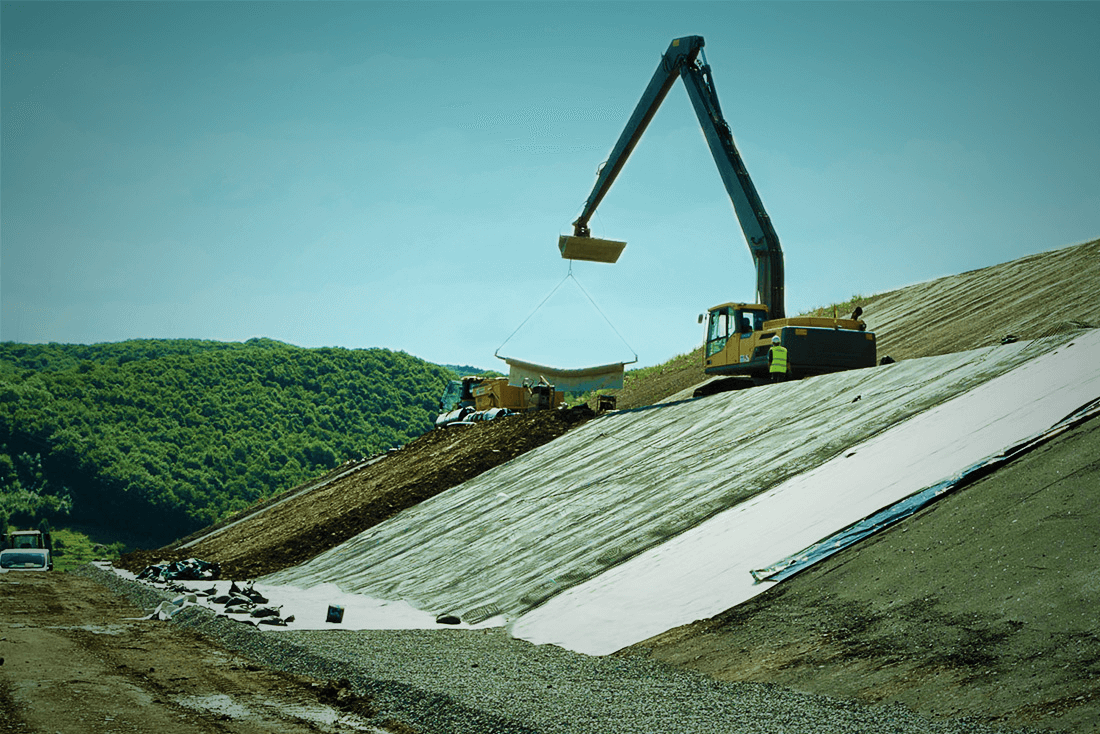
In erosion control and civil engineering, geotextile fabric plays a crucial role in reinforcing slopes, controlling sediment, and promoting long-term soil stability. One of the most important properties of these fabrics is tensile strength — a key factor in determining how well the material performs in tough environmental conditions.
Understanding how tensile strength affects slope stabilization can help contractors, landscapers, and engineers choose the right product for their erosion control needs.
Geotextiles are permeable fabrics used to improve soil characteristics. Commonly made from synthetic materials like polypropylene or polyester, geotextiles are installed to separate, filter, reinforce, protect, or drain soil in various applications.
These fabrics are widely used in roads, retaining walls, drainage systems, and — most importantly — slope stabilization projects.
There are two main types of geotextiles:
Each type is selected based on the specific needs of a project, with tensile strength being a major determining factor.
Tensile strength refers to the fabric’s ability to resist breaking under tension. It’s measured in pounds or kilonewtons per meter (kN/m) and indicates how well the fabric can withstand stress before it tears.
In slope stabilization, higher tensile strength geotextiles are critical because they:
Geotextiles enhance soil stability by:
By acting as a barrier and reinforcement layer, geotextiles reduce surface runoff velocity and keep topsoil anchored in place — even on steep slopes. This is especially important in areas with heavy rainfall or poor soil conditions, where erosion can happen quickly and cause serious damage.
Looking for high-quality geotextiles for your next slope stabilization or erosion control project? Contact Texas Erosion Supply today! We carry everything you need for lawn care, slope stabilization, and erosion control — all backed by expert support and fast delivery.
Find out more by contacting us and get the advice on how to implement drainage solution for your necessities!
