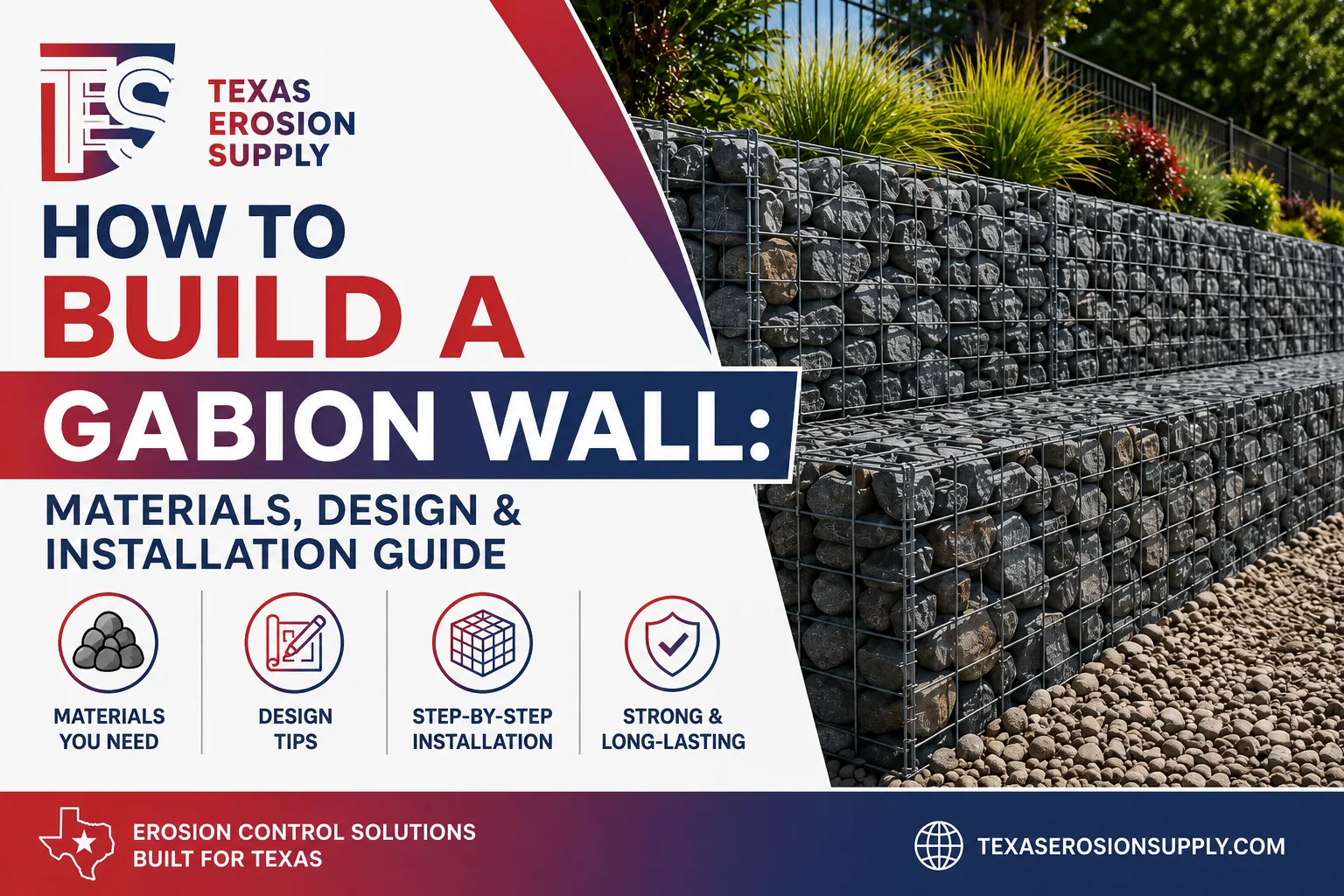
How to Build a Gabion Wall: Materials, Design & Installation Guide
Gabion walls have become one of the most popular solutions for retaining walls, slope stabilization, and shoreline protection across Texas — and for good reason. They’re durable, permeable (so hydrostatic pressure isn’t an issue the way it is with solid concrete), and they blend into the landscape better than most engineered alternatives. If you’re planning your first gabion project, here’s what you need to know about materials, design basics, and installation.
What Is a Gabion Wall?
A gabion wall is built from wire mesh baskets filled with rock, then stacked to form a wall or retaining structure. The word “gabion” comes from the Italian gabbione, meaning “big cage” — which is essentially what each unit is. Because the structure is made of loose stone inside a flexible wire cage rather than a single rigid slab, gabion walls can flex slightly with ground movement without cracking or failing outright, and water drains straight through instead of building up pressure behind the wall.
Materials You’ll Need
Welded wire gabion baskets. Galvanized (or PVC-coated galvanized, for a longer service life in wet or coastal conditions) welded wire mesh baskets are the standard choice for most residential and commercial projects. Basket height, width, and mesh opening size should be selected based on the wall height and the size of the fill rock you’re planning to use.
Fill stone. Rock should be sized larger than the mesh openings so it can’t work its way out over time — typically 4 to 8 inches in diameter for most standard basket mesh sizes. Angular stone locks together better than rounded river rock, giving the finished wall more internal stability.
Non-woven geotextile fabric. Installed behind the baskets against the cut slope or excavated face, geotextile fabric prevents fine soil particles from washing through the gaps in the wall while still allowing water to pass — critical for both wall performance and preventing erosion behind the structure.
Lacing wire or fasteners. Used to tie adjoining baskets together at the corners and along shared edges, and to install internal bracing wires (sometimes called “tie wires”) that keep the basket faces from bulging once filled.
Design Basics: Getting the Wall Right Before You Build
A few design decisions make the difference between a gabion wall that lasts decades and one that fails prematurely:
Batter (setback). Taller gabion walls are typically built with a slight backward lean, or batter, into the slope — commonly around 6 to 10 degrees — rather than a perfectly vertical face. This adds significant stability against the soil pressure behind the wall.
Base preparation. The foundation course needs a firm, level, well-compacted base. Any soft spots or unevenness at the base will telegraph up through every course stacked on top of it.
Basket sizing by course. On taller walls, it’s common to use larger, deeper baskets for the base courses and progressively smaller ones toward the top — this mirrors how gravity retaining walls are engineered and reduces the overall material needed without sacrificing strength.
Drainage. Even though gabion walls are inherently permeable, a drainage layer or weep points at the base help manage water that collects behind the wall during heavy rain, which is especially relevant for Texas’s intense seasonal downpours.
Step-by-Step Installation
Excavate and grade the base. Dig a level trench or pad slightly wider than your planned wall footprint, and compact the base thoroughly.
Lay the geotextile fabric along the back face of the excavation, extending it up the full planned height of the wall with enough overlap at the top to fold back over the final course.
Assemble and place the base course baskets, wiring adjoining baskets together at every shared edge and corner.
Install internal tie wires across the open baskets before filling, spaced according to the basket manufacturer’s spec — these prevent the wire faces from bulging outward under the weight of the stone.
Fill with stone by hand along the visible face for a neater finished appearance, and machine-fill the interior for efficiency on larger projects.
Close and lace the lids once each basket is filled, then repeat the process for each subsequent course, stepping back slightly if your design calls for a batter.
When to Bring in a Professional
Small decorative gabion features or short garden walls are very doable as a DIY project. But for retaining walls over about 3–4 feet, walls supporting a driveway or structure, or any wall where failure could put people or property at risk, it’s worth having a civil engineer review the design and, in many cases, having the installation professionally supervised. Soil conditions, drainage, and load calculations vary enough site to site that a design that works perfectly on one slope can under-perform on another.
Get Gabion Materials You Can Trust
Texas Erosion Supply stocks welded wire gabion baskets, geotextile fabric, and the other materials you need for a gabion wall project, whether you’re a contractor bidding a large retaining wall job or a homeowner tackling a slope on your own property. Browse our gabion baskets or give us a call and we’ll help you figure out exactly what your project needs.
Find out more by contacting us and get the advice on how to implement drainage
solution for your necessities!